
The Tesla Roadster did not begin with a blank sheet of paper. It borrowed a proven British sports car chassis - the Lotus Elise - and replaced one component that held the platform back: the internal combustion engine. The result kept the handling, balance, and driver familiarity of a real sports car while swapping in an electric powertrain that redefined what the car could do.
A WordPress to headless migration follows the same logic. Instead of rebuilding your content operation from scratch, you keep the WordPress editor, content model, media library, and roles your team already trusts - and the limiting frontend, the theme rendering layer, with a modern JavaScript layer that makes the entire site faster, more flexible, and easier to feed into every channel you care about. In direct terms: headless WordPress means WordPress becomes a content engine behind an API, while a separate frontend built with React, Next.js, Astro, Vue, or similar handles presentation. Done properly, with careful redirect mapping and SEO-safe redirects, a headless migration preserves the search equity you have spent years building while unlocking performance, design freedom, and developer velocity that a traditional theme cannot match.
article explains the mechanics of a headless WordPress migration, the migration path, and the SEO safeguards - and argues that the Roadster mindset is the right frame for the decision because it clarifies what to keep and what to replace.

Source: www.teslamagazine.org
The Tesla Roadster Analogy: Keep the Chassis, Replace the Engine
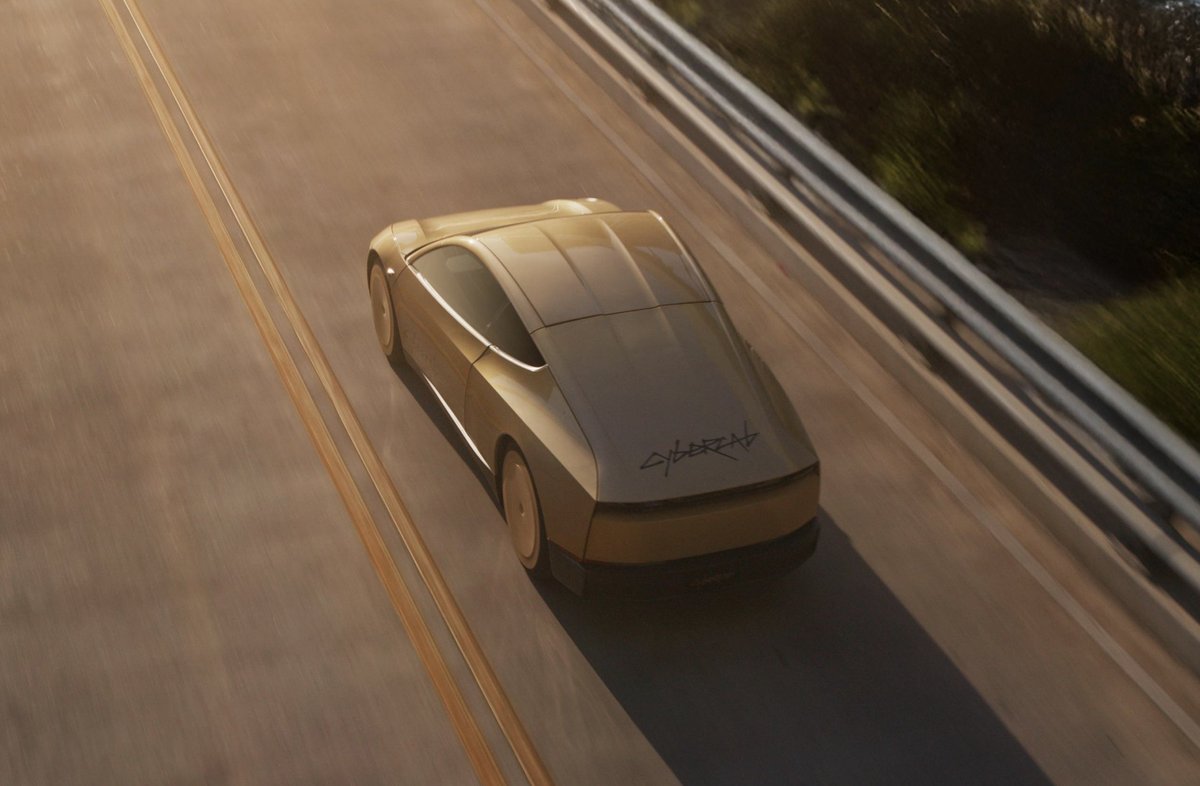
Source: www.basenor.com
What Made the Tesla Roadster a Proof of Concept
When Tesla the original Roadster in2008, it not attempt to reinvent the entire automobile. It took an existing, well-understood chassis and focused its energy on the part that mattered most: the powertrain. The lithium-ion battery pack and electric motor turned a familiar sports car into proof that an electric vehicle could be desirable, fast, emotionally engaging rather than just a compromise.
The lesson was that the chassis was irrelevant. The lesson was that the chassis was the platform's strength, and the engine was the constraint. Keeping one while replacing the other allowed Tesla to move quickly, prove the concept, and use that proof to fund the Model S and everything that followed.
Source: www.advancedcustomfields.com
The Headless WordPress Parallel
WordPress is the chassis. content model - posts, pages, custom post types, taxonomies, media, user roles, and the editor - is battle-tested, well-documented, and familiar to millions of people. That is the part worth keeping.
The engine is the theme layer: the server-side PHP templates that render every page by pulling data from the database and assembling it on each request. That layer is the constraint when want a faster site, a component architecture, or content that flows into multiple frontends.
A WordPress to headless migration is not a rejection of WordPress. It is the decision to keep the platform's best asset - the content engine - while replacing the theme layer with a frontend you fully control.
What Headless WordPress Actually Means
Architecture, Simply Explained
In a traditional WordPress site, the requests a URL, WordPress boots up, runs PHP, queries the database, applies the theme's templates, and returns a complete HTML page. The content and the presentation are entangled in a single system.
In a headless WordPress, that entanglement is removed. WordPress continues to store and manage content, but frontend is a separate. That frontend requests content through the WordPress REST API or through WPGraphQL, receives structured data, and renders it however the design system requires.
The frontend can:
- Static - pages pre-rendered at build and served from a CDN
- Server-rendered pages rendered on request for up-to-the-second content
- Hybrid - a mix of static pages and dynamically rendered sections
WordPress.com's own headless WordPress explainer walks through the fundamentals of decoupling the CMS from the frontend, reflecting how established the pattern become across the WordPress ecosystem. The shift is no longer an experiment for early adopters; it is a recognized architecture for teams that need performance, portability, and control.
How the Ecosystem Has Embraced the Shift
The WordPress ecosystem has moved decisively in this direction. The REST API became part of WordPress core. WPGraphQL emerged as a robust GraphQL layer. Hosting providers now market headless-friendly tiers. Page builders once the way to avoid touching a theme, increasingly coexist with decoupled frontends that pull from the same content APIs.
For content teams, important point is that headless does not mean losing the WordPress dashboard. It means the dashboard becomes a cleaner, more focused content workspace, while the presentation layer becomes a dedicated environment for code and design.
Why a WordPress to Headless Migration Is a Rebuild, Not a Replacement
fear many teams bring to a headless WordPress migration is that they will lose the familiar editor, break their SEO, and strand years of content. The Roadster analogy is useful precisely because it addresses that fear.
What You Keep
When you migrate WordPress to headless, keep:
- The WordPress admin - authors, editors, and content managers continue working exactly as they do today
- The content model -, pages, custom post types, taxonomies, and custom fields remain intact
- The media library - though you may want to move media delivery to a CDN, the library itself carries forward
- User roles and permissions - the editorial workflow does not need to change
- SEO-relevant content - titles, slugs, body content, alt text, and categories all survive the migration
What You Let Go
What changes is the theme. The custom header.php, single.php, and functions.php files that have accumulated years of patches give way to components, design tokens, and a build pipeline. That is a release, not a loss. The theme layer is often the least maintainable part of a mature WordPress site - the place where performance bottlenecks and conflicting plugin styles accumulate.
The shift is similar to the Roadster's transition: the chassis and steering feel remained, but the engine that had limited the platform was gone.
The Case for Decoupling: Performance, Design, and Content Velocity
Faster Pages Without the Bottleneck
A traditional WordPress theme must execute PHP, run database queries, and templates before the browser sees a single byte. Caching plugins mitigate this, but they add complexity and fail for personalized or frequently updated content.
A headless frontend changes the physics. Static pages are generated at build time and served from a CDN edge, eliminating server processing entirely for most requests. Dynamic sections can use server-side rendering or incremental static regeneration, preserving freshness without sacrificing speed. The result is a site that loads milliseconds rather than seconds - a difference users feel immediately and search engines reward.
A Creative Playground for AI Tools, Copywriters, and Designers
The decoupled architecture creates a clean separation of concerns:
- AI tools can read the API directly, retrieving clean, structured content without scraping
- Copywriters keep a familiar editor, and their becomes portable across web, mobile, email, and AI interfaces
Designers work in a component-based design system rather than fighting theme templates
The table below summarizes the shift:
| Aspect | WordPress | Headless WordPress |
|---|---|---|
| Frontend rendering | PHP theme renders on server | JavaScript app fetches content via API |
| Editor | WordPress dashboard | WordPress dashboard (unchanged) |
| Design flexibility | Constrained by theme templates | Full design system and component library |
| Performance ceiling | Depends on theme, plugins, and caching | Static generation and edge delivery |
| Multi-channel publishing | Limited without plugins | Native via API for web, mobile, and AI |
| SEO control | Theme and plugin dependent | Fullend control over meta, JSON-LD, and redirects |
| Content structure | Mixed HTML in post body | Structured fields and clean API responses |
The Migration Roadmap: How torate WordPress to Headless the Right Way
A WordPress to headless migration is a project with clear phases. Skipping any phase creates rework later, and skipping the SEO phase creates lasting damage.
1. Content Audit and Inventory
Before writing a line of frontend code, document every content type, every template, and every URL on the current site. Note which pages drive organic traffic, which pages are thin, and which URLs are linked externally. This inventory becomes source of truth for the rebuild.
2. Modeling
Decide how each content type maps to a structured model. A blog post may need fields for title, excerpt, cover image, category, and body. A case study may need fields for client name, challenge, solution, and outcome. Structured content models are more machine-readable than free-form HTML, which is why they matter for AI consumption and multi-channel reuse.
3. API Strategy
Choose between the WordPress REST API and WPGraphQL. The REST is simple, familiar, and built into core. GraphQL lets the frontend request precisely the fields it needs, reduces over-fetching, and simplifies component data requirements. The choice depends on the complexity of the content model and the frontend team's.
4. Frontend Rebuild
Build the new frontend with the framework that fits the team: Next.js for hybrid rendering, Astro for content-heavy sites Gatsby for deeply static sites, or/Nuxt for teams already in that ecosystem. Convert the old theme's templates into reusable components fed by design system. This phase benefits from working with a team that specializes in headless WordPress integration, as right partner has already solved the edge: author previews, media handling, authentication, and SEO-safe redirects### 5. Redirect Mapping and SEO Safeguards
This is non-negot. It is covered in depth in the next section, but the principle is simple: every that changes must have 301 redirect, and redirect must be tested before launch.
6. Testing and QA
Test the frontend against real content, real media, and real user flows. Verify the WordPress preview still works for editors. Check that forms, search, and authentication behave correctly. the redirect list through a crawler to confirm no 404s survive.
7. Launch with Observability
Launch is not the end. Monitor Core Web Vitals, crawl errors, and search data in the weeks after launch. Treat the first month as a stabilization period and to adjust.
A real-world example illustrates the pattern: a Spanish course platform replaced a rigid WordPress theme with aoupled React frontend while preserving the content workflow, demonstrating how a focused rebuild can modernize a platform without discarding its content foundation.
Redirect Mapping and SEO Safards: The Non-Negotiable Layer
The most damaging mistake in any headless CMS migration is treating redirects as an afterthought. the frontend changes, URL structures often change with it. If those changes are not mapped, search engines see a site full of 404, and the search equity the old site accumulated begins to evaporate.
SEO-safe redirects are the seatbelt of a headless migration. They ensure that every visitor who follows an old link, every crawler that revisits an indexed URL, and every external site that references your content arrives the correct new page.
Redirect Mapping, Step by Step
- Inventory every URL from the current site: posts, pages, categories, tags, media, and archive pages
- Define the new URL structure the headless frontend before writing redirect rules
- Map old to new one-to-one whenever possible - a direct 301 from the old path to the equivalent new path preserves the most equity
- Handle structural changes explicitly - merged pages, removed categories, and renamed slugs each need a deliberate destination
- Implement redirects at the edge or server level - in the hosting platform, CDN, or reverse proxy, not inside the WordPress
6 Test the entire map with a crawler before launch and re-test after launch
Preserving Link Equity During a Headless CMS Migration
A 301 redirect passes most of the original page's ranking signals to the destination. A missing redirect passes nothing. The difference a well-mapped migration and a careless one can be measured in lost organic traffic, lower rankings, and months of recovery.
Beyond redirects preserve internal link structure. Update internal links during the content model phase so that the new frontend links to new URLs directly, rather than forcing every click a redirect chain. Update sitemaps to reflect the new structure and submit them through Search Console. Keep the old sitemap live if needed to speed crawler discovery.
Headless CMS SEO: What Changes and What Gets Better
Headless CMS SEO has a for being more difficult than traditional WordPress SEO, but that reputation is misleading. What changes is that SEO responsibility moves from plugins and themes into the front codebase. What improves is the level of control.
Rendering Strategy
The frontend framework determines how content is rendered, and decision has an SEO impact. Static generation produces fast, fully readable HTML at build time. Server-side rendering generates HTML on each request for freshness.mental static regeneration blends the. The key SEO requirement is that search engine crawlers receive complete HTML with the content already in it, not empty shell that requires JavaScript execution to populate.
Metadata, Structured Data, and Crawlability
In a headless WordPress frontend, the team controls every piece of metadata: title tags, meta descriptions, canonical URLs, Open Graph tags, and Twitter cards. That control is a benefit when the frontend team treats SEO as a core requirement rather than a plugin afterthought.
Structured data fits naturally into this architecture. A headless frontend can generate JSON-LD for articles, FAQs, and HowTo content as part of its build process, keeping schema consistent across thousands of pages. FAQ and HowTo structured data are natural fits for content-heavy headless sites, giving search engines explicit signals about the questions each page answers.
The Next-Generation Roadster Pattern: Scaling the Proof of Concept
The Roadster did not remain a one-off curiosity. It proved a pattern: take a platform, replace the limiting part, and push performance beyond what the original chassis was designed to do. That pattern scaled into the Model S, Model X, Model 3, and Model Y - each a more mainstream execution of the same core idea.
The lesson for teams is direct the first headless WordPress project proves the pattern, and every subsequent project scales it. What started as an architecture for developers experimenting with frameworks has become a mainstream direction. WordPress's ecosystem now treats headless as a recognized path, and the teams that adopted it early are running e-commerce storefronts, media properties, and SaaS marketing sites on decoupled WordPress backends.
The Roadster mindset is not about. It is about recognizing when the existing platform's frontend is the constraint and having the discipline to replace only that constraint while keeping else.
Where AI Users, Copywriters, and Designers Win the Most
For AI Users
Headless WordPress turns content into a machine-readable resource. AI tools can pull from the API that feeds the website, retrieving clean, structured fields rather than scraping rendered HTML. That content becomes available for:
- AI-assisted search experiences
- Chatbot and assistant training
- Retrieval-augmented generation pipelines
- Automated content repurposing and translation
The cleaner the content model, more useful the content becomes to AI systems. Free-form HTML embedded in a post body is harder for model to parse than structured fields for title, summary, body, category, and audience.
For Copywriters
Copywriters lose nothing in a headless migration. The editor they already know remains the editing surface. What is new is what happens after they publish: their content becomes available to every frontend, every channel, and every downstream system without reformatting.
That means one piece of writing can power a page, an email campaign, a mobile, and an AI assistant's knowledge base without a separate copy-paste workflow for each. The writer's work becomes the canonical source, not a draft to be reformatted by someone else.
For Designers
Designers gain the most visible freedom. A traditional WordPress theme imposes its templates, its markup, and its assumptions on every page. A headless frontend starts from the design system - components, tokens, breakpoints, and interactions built by the design team and implemented faithfully by developers.
The designer's deliverable is no longer a mockup that a theme must be coerced to match. It is the design system itself, expressed in components that the frontend consumes. That is the visual equivalent of removing the combustion engine: the platform no longer dictates what the experience can be.
Common Mistakes in a WordPress to Headless CMS Migration
. Skipping redirect mapping - the most damaging and most avoidable mistake
2. Overlooking author previews - editors need to see how content will look before publishing
3. Losing SEO metadata - titles, descriptions, and canon must be carried into the new frontend
4. Building a JavaScript-only shell - crawlers and social platforms need complete HTML
5. Ignoring content velocity - if publishing becomes slower, the migration has failed its core audience
6. Treating the rebuild as a-to-one port - the frontend should use and design tokens, not recreate old template logic
7. Skipping the content audit - unknown URLs become broken URLs after launch
Conclusion: The Roadster Moment for Your Website
The Tesla Roadster's most important was not a new car. It was a rule: you do not have to rebuild everything to transform what a platform can do. identify the component that limits you, replace it, and keep the parts that already work.
Headless WordPress migration applies that rule to the web. The content engine you already trust stays. The editor your team already knows stays. The URLs your audience already visits are preserved through careful redirect mapping. What changes is the frontend - layer that has been holding back speed, design, and multi-channel publishing.
It is acknowledging when headless might be the right choice. If your site is small, rarely updated, and well-served by an existing theme, the migration effort may outweigh the benefits. The Roadster mindset is about discipline, not dogma - it is about recognizing the constraint and knowing when replacing it is worth the investment.
For teams that have outgrown their theme, the decision is not whether to keep WordPress. The decision is whether to keep the engine that slows it down. If your current theme feels like a combustion engine choking your best ideas, it may be time to start the conversation about a headless WordPress integration and rebuild the frontend your content, your team, and your audience deserve.
Frequently Asked Questions
Will editors still see the familiar WordPress dashboard after a headless migration?
Yes. The WordPress admin remains the editing environment for content, media, users, and settings. The frontend changes, but the editor experience stays intact. Authors and editors continue to write, review, and publish exactly as they do today.
Does headless WordPress hurt SEO?
Not when the migration is handled correctly. The risk comes from broken URLs, lost metadata, and JavaScript-only rendering. With SEO-safe redirects, proper metadata management, and rendering strategy that serves HTML, a headless site can perform as well or better than a traditional WordPress site.
Can we keep our WordPress plugins when we go headless?
It depends on the plugin. Plugins that affect the admin, content model, or API - such as Advanced Custom Fields, security plugins, and editorial tools - generally carry forward. Plugins that affect the frontend, such as page builders and theme-dependent sliders, become irrelevant in a decoupled architecture. Each plugin should be reviewed during the content audit phase.
Is a headless migration more expensive than a traditional WordPress rebuild?
The initial build can require more development effort because the frontend is built from components rather than configured through a theme. The long-term cost profile is more favorable, however: performance improvements reduce infrastructure demands, the system speeds up changes, and the clean separation of concerns lowers maintenance burden.
How long does a typical WordPress to headless migration take?
Small sites can complete a migration in weeks. Larger sites with complex content, many post types, and extensive media libraries can take four to six months. content audit, redirect mapping, and testing phases should not be compressed to save time.
Is headless WordPress only for large companies?
The pattern works for any team that has outgrown its theme, needs to ship content to multiple channels, or wants a modern frontend. Small teams from the same performance and design freedom, especially when the frontend is built with static generation and served from a CD.
0 comments:
Post a Comment