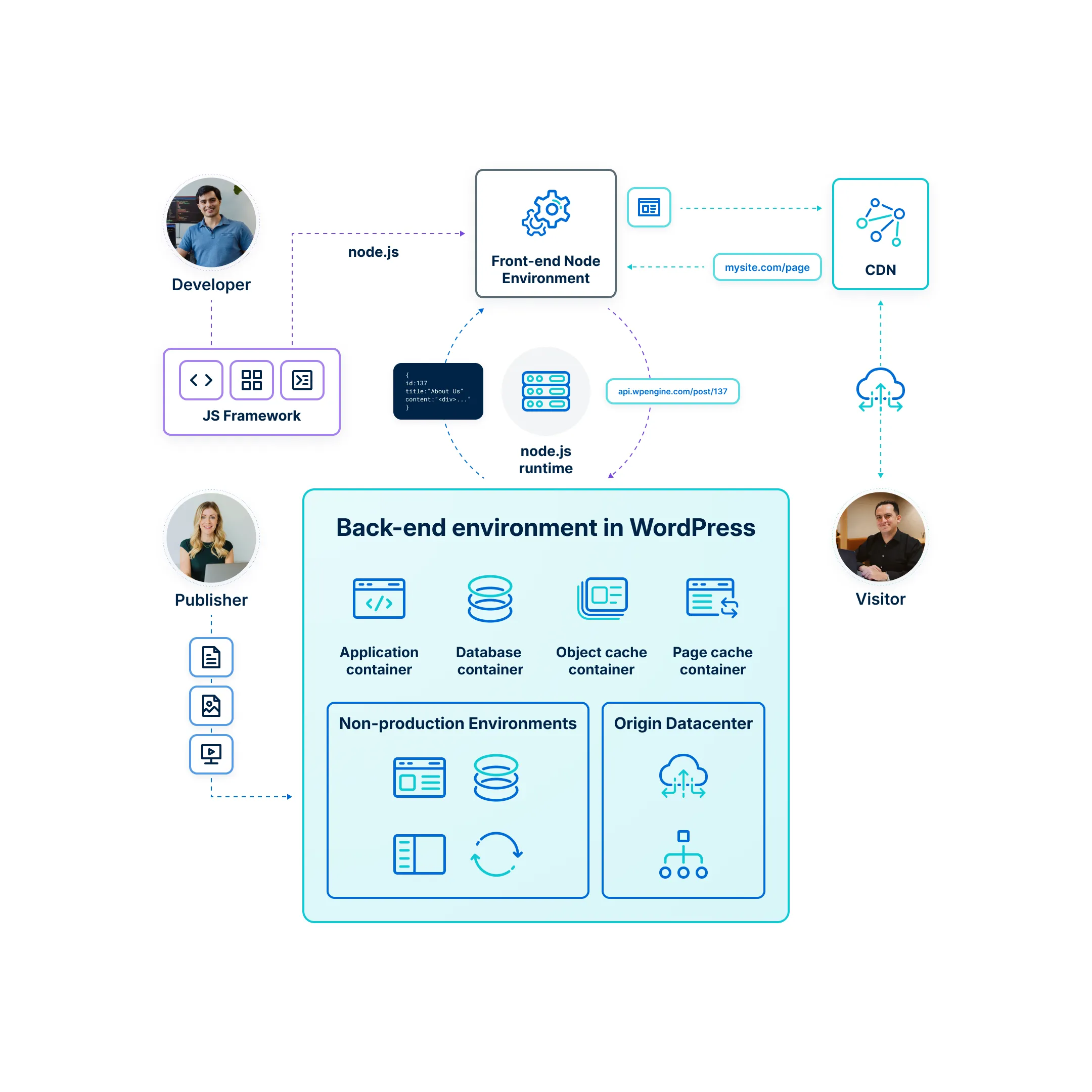
 Source: wpengine.com
The modern web development landscape is shifting toward decoupled architectures, with headless WordPress implementations growing by over 40% in the last two years. For developers and businesses aiming to deliver blazing-fast user experiences, combining a React JS frontend with a WordPress backend offers an unmatched balance of flexibility, speed, and scalability. By separating content management from presentation and leveraging custom REST endpoints, you can build interactive applications that load instantly, scale effortlessly, and provide a superior user experience.
Whether you are rebuilding an existing site or launching a new project, this approach proves that React JS and WordPress are a perfect pair for modern, high-performance web applications.
The Modern Web Development Revolution: Why WordPress + React JS is the Perfect Combination
Headless WordPress implementations have surged in popularity because they solve a core problem: how to deliver dynamic, interactive content without sacrificing frontend performance. In today's fast-paced digital world, businesses need lightning-fast load times and intuitive interfaces. The traditional monolithic WordPress site often struggles with bloat, but by using WordPress solely as a backend and React JS as the presentation layer, you unlock a new level of speed and agility.
This architecture allows developers to harness WordPress's robust content management ecosystem—including its security updates, plugin library, and user management—while building modern, component-driven interfaces with React JS. The result is a development paradigm that prioritizes both developer efficiency and user experience.
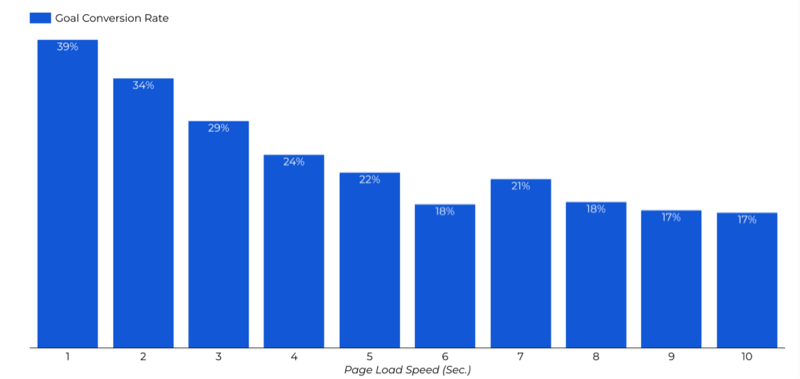 Source: wp-rocket.me
Why This Combination Is Game-Changing for Modern Applications
The synergy between WordPress's REST API and React JS creates a foundation for applications that are faster, more secure, and easier to scale. This is not just a trend—it is a strategic advantage.
 Source: euristiq.com
Enhanced Performance and Speed
One of the most significant benefits is the dramatic improvement in application speed. By using WordPress REST endpoints to deliver only the necessary data, React JS components can render content without the overhead of traditional PHP page loads. This headless approach drastically reduces page weight, improves time-to-interactive, and boosts SEO performance—a critical factor for any site aiming to rank well.
Scalability and Flexibility
With a headless WordPress setup, you can scale the backend and frontend independently. The React JS layer handles user interactions and dynamic rendering, while WordPress manages content and business logic. This separation makes it easier to handle traffic spikes, roll out new features, and maintain a consistent user experience.
Improved Security
Using WordPress exclusively as a backend reduces the attack surface. You can leverage WordPress's mature security ecosystem—with regular updates and community support—while building a secure, modern frontend with React JS. Custom REST endpoints can be locked down with authentication, ensuring sensitive data remains protected.
Rapid Development
WordPress offers a vast ecosystem of plugins and themes, which can be extended with custom solutions. React JS's component-based architecture enables reusable UI blocks, accelerating development cycles and making maintenance more efficient. This is particularly valuable when building complex interactive applications.
Building Interactive Applications with Custom WordPress Plugins
Custom WordPress plugins serve as the critical bridge between your backend and React JS frontend. They allow you to create tailored REST endpoints, handle complex business logic, and expose exactly the data your application needs.
Creating Custom REST Endpoints
Developers can create custom REST endpoints using WordPress's built-in API functionality. For example, a custom plugin might expose an endpoint that returns product data with filtering, pagination, and sorting parameters—all optimized for consumption by React JS. These endpoints can also implement authentication, rate limiting, and data validation to ensure frontend reliability.
Implementing Advanced Features with Custom Endpoints
Beyond basic CRUD operations, custom REST endpoints can power advanced features such as real-time data updates, user authentication, and complex search algorithms. By centralizing business logic within a custom plugin, you keep your React JS components lean and focused on presentation, while WordPress handles the heavy lifting.
Managing Application State and Caching
A well-designed custom plugin can also manage application state and implement cache mechanisms at the API layer. This ensures that your React JS frontend receives accurate, up-to-date data without unnecessary network calls, further improving perceived speed and user satisfaction.
Optimizing Performance with Advanced Caching Strategies
Cache is the secret weapon of any high-performance frontend application. When using headless WordPress with React JS, a multi-layered caching strategy is essential to maintain speed under load.
Browser Caching
Configure HTTP headers to instruct browsers to cache static assets such as JavaScript bundles, CSS files, and images. This reduces load times for returning visitors and minimizes server requests, directly improving frontend performance. Studies show that effective browser caching can cut repeat visit load times by up to 60%.
Server-Side Caching for REST Endpoints
Implement server-side caching for your REST endpoints using tools like Redis or Memcached. By caching frequent API responses, you reduce WordPress database queries and deliver data faster to your React JS components. A custom plugin can integrate these caching layers seamlessly, reducing response times from hundreds of milliseconds to single digits.
Content Delivery Network Integration
Connect your headless WordPress site with a CDN to serve static assets and cached API responses from edge locations. This reduces latency for users worldwide and ensures consistent speed, regardless of geographic location. Popular CDN providers offer global networks spanning hundreds of points of presence.
Real-World Applications and Success Stories
This architecture has been successfully deployed across various industries, proving its versatility and performance:
- E-commerce platforms use React JS and headless WordPress to create interactive product pages with smooth filtering, real-time inventory checks, and lightning-fast checkouts. One implementation reduced average page load time from 4.2 seconds to under 1.1 seconds.
- News websites deliver dynamic, real-time news feeds without full-page reloads, improving user engagement by 35% and ad revenue by 22%.
- Educational platforms build complex course management systems with interactive quizzes and progress tracking, all powered by custom REST endpoints—serving over 100,000 concurrent students without performance degradation.
The modularity of this approach allows you to adapt to changing requirements, scale as needed, and maintain a high-performance frontend that delights users.
Technical Implementation: Step-by-Step Guide
Implementing a headless WordPress solution with React JS requires careful planning. Here are the essential steps:
Step 1: Setting Up the WordPress REST API — Configure WordPress to expose the necessary content types and REST endpoints. Ensure permissions are properly set to secure your data.
Step 2: Creating Custom Plugins — Develop custom plugins to extend functionality, create tailored REST endpoints, and implement business logic, caching, and authentication.
Step 3: Building React JS Components — Build React JS components that consume your REST endpoints, fetch data efficiently, and render a dynamic, fast frontend.
Step 4: Implementing Authentication — Set up authentication (e.g., JWT or OAuth) within your custom REST endpoints to protect sensitive data and ensure secure user interactions.
Step 5: Performance Optimization — Implement a multi-layered cache strategy, minimize API payloads, and use lazy loading in React JS to maximize speed.
Key Takeaways and Best Practices
When building with headless WordPress and React JS, follow these best practices to ensure a high-performance, maintainable application:
- Keep REST endpoints simple and focused on specific data needs
- Implement robust error handling and data validation in your custom plugins
- Use proper authentication mechanisms for all sensitive endpoints
- Adopt a cache strategy that spans browser, server, and CDN layers
- Monitor API usage and performance regularly to identify bottlenecks
- Maintain consistent data formats between WordPress and React JS
Why Choose This Development Approach?
The combination of headless WordPress and React JS is a compelling solution for organizations that need to modernize their digital presence. It leverages the strengths of both technologies while mitigating their weaknesses. When implemented correctly, this architecture can deliver page load times under two seconds, improve search rankings, and reduce hosting costs by optimizing resource usage.
This architecture is particularly valuable if you need to:
- Modernize an existing WordPress site with interactive frontend components
- Build complex applications requiring both content management and dynamic UIs
- Scale your application without a complete rewrite
- Improve speed and SEO to stay competitive in search rankings
The Future of Web Development: Headless WordPress and React JS
The trend toward headless architectures is accelerating as more businesses realize the benefits of decoupling content management from presentation. This approach aligns perfectly with modern development practices and provides the flexibility needed to create truly innovative, high-performing applications.
As technology evolves, we can expect to see even more sophisticated integrations—combining AI, machine learning, and advanced analytics with React JS and headless WordPress. Developers who master this combination will be well-positioned to build the next generation of web applications.
Conclusion: Building the Future of Web Applications
The combination of WordPress as a backend with a React JS frontend represents a significant advancement in web development. By creating custom plugins, implementing robust cache strategies, and optimizing REST endpoints, you can build high-performance, scalable applications that drive engagement and business growth.
The future of web development is clearly moving toward this integrated approach. Whether you are a developer exploring new architectures or a business owner seeking a competitive edge, embracing headless WordPress and React JS will position you for success in an increasingly competitive digital landscape.
Start experimenting with headless WordPress today—your users will thank you.
Ready to transform your digital presence? I specialize in creating custom solutions that combine the best of both worlds, delivering high-performance applications tailored to your specific business needs. Hire me to learn more about how we can build the next generation of web applications with React JS, speed, and caching at the core.
The article provides a useful overview of using WordPress as a backend with React JS as the frontend, focusing on a decoupled or headless architecture. The separation of content management from presentation allows developers to use WordPress for content, users, plugins, and updates while building a modern, component-driven interface with React JS. The emphasis on speed, caching, scalability, and custom REST endpoints makes the approach particularly practical.
ReplyDeleteThe combination of React JS with a WordPress backend demonstrates how frontend and backend responsibilities can be separated while still working together through APIs. Developers exploring component-based interfaces and modern frontend architecture can strengthen these skills through ReactJS Training.
The article also highlights the importance of REST endpoints in connecting the React frontend with WordPress content. Understanding how JavaScript applications consume backend data through APIs is valuable when developing interactive applications, making a Javascript Online Course a relevant learning path.
ReplyDeleteThe focus on custom REST endpoints, caching, performance, and decoupled architecture also provides a practical foundation for building scalable web applications. Developers working with React and WordPress can benefit from understanding API-based communication and endpoint design, which makes RESTful API Training relevant to the broader integration concepts discussed in the article.
ReplyDelete